How Warzone Streamers Fared Against 50 Iridescent Players in the 2026 Iri Invitational
Need articles like this for your video? They help promote it on YouTube and Google — order them in the Telegram bot @sat_sit_bot. It writes articles around your video, embeds the video and publishes them on popular niche websites (no ads). Try it free: 50 articles on us.
Key takeaways
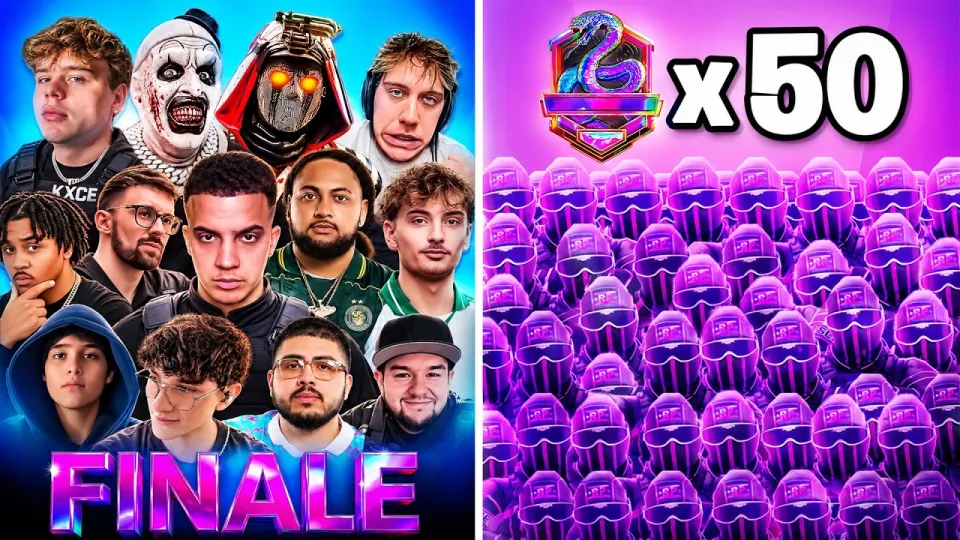
- Swagg's Iri Invitational put streamers against a pool of roughly 50 Iridescent-ranked Warzone players.
- The finale ran six games of Rebirth Island ranked solo customs for a $2,000 prize pool.
- The lineup mixed creators and pros: Swagg, Shifty, Hisoka, JoeWo, Metaphor, Kxce, Diablo, Hero, Dongy, Kenner, Ketchup and more.
- A dedicated segment asks whether Kenner was cheating, and the community split on the answer.
- JoeWo and Saxzu left early after a rough run, which drew criticism from viewers.
Warzone's ranked ladder has always been a measuring stick, and the Iri Invitational turned that measurement into a show: roughly 50 Iridescent-ranked players were pitted against a roster of well-known Warzone streamers across six games of Rebirth Island ranked solo customs for a $2,000 prize pool. The finale, hosted by Swagg, is the closest thing the community has had to a formal stress test of streamer reputation versus ladder rank. You can catch Swagg live and see how these custom lobbies come together on his Twitch channel.
What the Iri Invitational actually tested
The Iri Invitational was not a standard kill race; it was a rank-versus-reputation experiment run in custom Rebirth Island lobbies. Iridescent is the top tier most Warzone players grind toward, and the premise asked a simple question: does a lobby full of Crimsix-and-above talent beat a lobby full of names people watch every night?
A few structural details defined the event:
- Six games total, all on Rebirth Island, all in ranked solo custom format.
- A $2,000 prize pool, modest by esports standards but enough to make every placement matter.
- A mixed field of creators and competitors, including Swagg, Shifty, Hisoka, JoeWo, Metaphor, Kxce, Diablo, Hero, Dongy, Kenner, Ketchup, Repullze, Saxzu, Lucky Chamu and others.
- Full POV coverage, so viewers could watch the same fight from multiple perspectives instead of one edited highlight reel.
The solo format is the part that matters most. Warzone ranked solos punish third parties and reward positioning and information over raw aim, which is exactly the skillset that separates a grinder from a content creator who plays for clips.
Why Rebirth Island solos reward a different kind of player
Rebirth Island solos compress the skill gap in ways that surprise people who only watch squad gameplay. The map is small, respawns are constant, and the circle forces contact early, so a mechanically gifted streamer cannot simply outshoot a lobby of Iridescents who understand rotations.
Three factors decide most Rebirth solo lobbies:
- Loadout timing. Getting a custom class early gives an advantage that compounds through the whole match; players who delay it usually fight uphill.
- Third-party discipline. In solos, every gunfight is a beacon. Iridescent players tend to break line of sight and reset instead of chasing kills.
- Endgame positioning. With 40-plus players condensed into the final circles, holding a power position beats pushing for a highlight.
That is why the invitational produced so many close finishes. Streamers with elite aim still lost fights to players who simply arrived at the right building first.
The Kenner question that split the community
The finale dedicates a segment to whether Kenner was cheating, and it became the most argued-about part of the series. The suspicion followed a pattern Warzone viewers know well: a player with less name recognition outperforming established pros in a lobby full of top-ranked talent.
A few things are worth separating here:
- Suspicion is not proof. Being unknown and playing well is not evidence of anything on its own.
- Custom lobbies are not LAN. Online play, monitor setups, network conditions and the absence of referee oversight all create room for doubt that only a LAN environment can settle.
- The community's default reaction is now distrust. After years of high-profile cheating scandals in Warzone, viewers assume the worst when a new name dominates.
The most repeated request from viewers was straightforward: put Kenner on LAN, the way Ketchup has competed in person, and let the results speak. Until that happens, the debate stays unresolved, and the segment functions as an honest record of the community's skepticism rather than a verdict.
Format problems the finale exposed
Six games is a short sample, and the finale showed where the invitational format still needs work. Two prominent players, JoeWo and Saxzu, left the series early after a rough stretch, which drew criticism from viewers who felt a paid invitational should be played out to the end.
Other structural gaps viewers flagged:
- Missing names. Biffle and Booya were repeatedly mentioned as absentees, and many argued their presence would have changed the standings.
- Uneven stakes. A $2,000 pool across dozens of players means individual placements pay little, which weakens the incentive to grind out a bad game.
- No LAN stage. Without an offline final, online results carry an asterisk for a segment of the audience.
None of these are fatal. They are the normal growing pains of a community-run tournament that is being built from scratch rather than by an established league.
Players who changed their reputations
Metaphor came out of the finale with more credit than almost anyone. Viewers repeatedly described his shot as crisp and his decision-making as underrated, and his use of smoke with a mouse-and-keyboard setup was called out as a smart, deliberate advantage rather than a gimmick.
Ketchup's late-game moments also stood out, with one clutch sequence becoming a running joke in the comments. Dongy versus Metaphor produced some of the sharpest one-on-one exchanges of the series, and the Iridescent side of the bracket consistently proved that ladder rank is not cosmetic.
The broader takeaway is that the gap between a top streamer and a top Iridescent grinder is narrower than the content ecosystem suggests. Streamers win on aim and game sense; Iridescents win on consistency and positioning. In a six-game sample, consistency usually wins.
What this means for Warzone ranked in 2026
Warzone ranked play in 2026 is defined by a large, skilled middle class of players who never appear on stream, and the Iri Invitational gave that group a stage. The format works because it converts an abstract rank into a visible matchup: you can watch an Iridescent player hold a building against a name you recognize.
For anyone trying to climb, the lessons from the finale are practical:
- Treat loadout access as a priority, not a bonus.
- Break fights early in solos instead of chasing the knock.
- Rotate before the circle forces you to, especially on Rebirth Island.
- Review your own POV the way these players reviewed theirs across six games.
Swagg's role here deserves credit. Holding down consistent Warzone content while organizing cross-community events is a large part of why the game still has an active competitive conversation.
Useful links
- Swagg on Twitch — live Warzone ranked and custom lobbies
- FaZe Clan Nuke Squad merch — Swagg's official merchandise
- Swagg's Discord — community, lobbies and event announcements
- Swagg on Twitter — schedules and updates
- Swagg on Instagram — clips and behind-the-scenes
The bottom line on streamers versus Iridescents
The Iri Invitational answered its own question in a way that satisfied almost nobody and entertained almost everybody: a lobby of Iridescent-ranked players is fully capable of beating a lobby of streamers, and the outcome came down to positioning and endgame discipline rather than name value. The Kenner controversy remains open until an offline stage settles it, and the absences of Biffle and Booya left a legitimate what-if hanging over the standings. What the finale proved is that the format has legs and that viewers want it back with a bigger prize pool and a LAN final. Swagg built the series as a community showcase, and as a piece of Warzone content it stands as one of the more substantive experiments the scene has produced. Follow along live at twitch.tv/swagg for the next iteration.
Source: Can 50 Iridescents Defeat STREAMERS? (FINALE) · Markdown version
Questions & answers
Did the Iridescent players actually beat the streamers in the Iri Invitational?
Yes, the Iridescent side held its own across the six Rebirth Island solo games and won plenty of individual fights against recognizable names. The finale's takeaway is that ladder rank translates directly into endgame positioning, which matters more in solos than raw aim. No single streamer ran away with the series.
Was Kenner cheating in the finale?
No proof was presented, and the segment exists because viewers were suspicious of an unfamiliar player outperforming established pros. Custom online lobbies cannot settle that question either way. The consistent community answer is to put Kenner on LAN and let the results decide.
Why did JoeWo and Saxzu leave the series early?
They exited after a rough run of games, and viewers criticized the decision because the event was a paid invitational with a prize pool. Leaving early removed their POVs from the remaining games and changed the lobby composition. It became one of the most discussed moments of the finale.
Who was missing from the Iri Invitational lineup?
Biffle and Booya were the names viewers mentioned most often as absentees, and many argued their presence would have altered the standings. The roster otherwise mixed creators like Swagg, Shifty, Hisoka and Metaphor with a large pool of Iridescent-ranked competitors. A future edition with a bigger field and a LAN final is the common request.